Showing posts with label sheep. Show all posts

Wednesday, October 22, 2014

For Whom the Bell Tolls

Cast iron dinner bell!
Last year, a very dear friend of mine was cleaning out her barn and endowed me with her cast iron llama dinner bell. I couldn’t believe it; it was so beautiful!  I brought it home and couldn’t wait to hang it.  


I was nervous to hang it outside because although it should be weather proof (to some degree), the weather at our farm is pretty severe at times. Every weather condition that takes place throughout the county just seems 10x more intense here.  J


So, I began to scout out a place on the farm where I could enjoy and see it, but also where it would be somewhat protected from the elements.  All the while that I was looking for the perfect spot, never once did anyone suggest we mount it where the animals could hear it ring! J


While sneaking into the barn, I think I've been heard!
Feeding at my farm rarely entails much coaxing of the animals to partake.  I try to sneak out and get buckets filled and flakes of hay distributed before all the thundering of several tons of animal come galloping, leaping, and scampering to meet me.


I can't tell if he heard the camera click
or actually heard the barn door creak!!
I have found that it’s very difficult to be “sneaky” with a headlamp on! The spotlight beckons, “COME!” 
I keep the barn doors well greased so that they don’t squeak and give my whereabouts away. The thing about horses---they can be ¼ mile away and hear that barn door and come galloping up before I can get food ready.
Jenna isn't waiting anymore, she's going to go check out the noise.
She's certain she saw me head to the barn.

So, I try to get out to the barn, close the gates around the barn undetected, and THEN open the barn doors.
Summer feeding is different from winter feeding at our farm for all the animals to some extent. We have SO MUCH grass, and our fields are so lush that the grain quantity I offer to everyone tapers off substantially during the summer. Overfeeding in the summer causes as many problems as underfeeding in the winter. Because all situations are different, I won’t even suggest that what I do is perfect; however, it does work for my farm.  

Song is still listening to the Sheep get their food.
She knows it's her time next!

BUT, when the days grow shorter, and the fields lose their nutrient capabilities, the assisted feedings become more important. Those feedings are usually done in the morning and afternoon when the sun’s warmth is not so prevalent….so I wear my “barn jacket”. Through the years, my barn jacket has become synonymous with “DINNER TIME!” at the farm.  It doesn’t matter which animal sees me first, he/she will start running…..  and soon, they are ALL running back to the paddock nearest the house.


Silver is excited that the buckets are now making their way to her paddock.
She's just not sure she likes the look of a camera up at my face.

When my daughters head outside, without me, with their own barn jackets on, it doesn’t create the same effect. We never really had noticed that until on one occasion one had grabbed my jacket as a quick throw on. She hadn’t gotten more than 10 paces off the back deck before all the animals had broken into a full gallop to come up for “DINNER TIME!”.  We have apples and pears on a few of the trees nearest that fence line for just that occasion!  J 


Everyone deciding that life is good.
Meal time at the farm is an important part of animal care. During the time they are eating, you can look them over, evaluate their chewing capabilities, look at feet/hooves, check for ticks, look for scrapes/cuts, remove brambles, and know which one will have to stay behind after meal time to be checked out further. 


Song and Silver are wondering, "is there more where that came from?"

I don’t feed my farm all at once.  It’s too impossible.  I feed one group of animals at a time so that I can spend time with everyone. Believe it or not, everyone is patient. They weren’t always that way, but through the years, they have learned that I will get to everyone eventually.


Decided to check out the treat bucket for herself

In the winter when morning lights and heat get turned on, the horses whinny and sheep begin to baa in anticipation of the morning feeding. As much as I’d like to stay inside and grab a cup of tea first, I usually throw on my coat and head to the barn.


Dinner Bell not yet mounted.


So, as much as I’d like to actually ring the dinner bell and watch all the animals come, at this point in time, the dinner bell will just be for my enjoyment!  And enjoy it, I do!!  J


Monday, October 13, 2014

Certified, "Kentucky Proud"!

A Felted Wreath from Wool
shorn from my sheep and llamas.
~created on my farm~


Last Friday, HeartFelt Baskets & Gifts received its certification from Kentucky Department of Agriculture to be considered Kentucky Proud! This isn’t a complicated or difficult process, but it was exciting to receive nevertheless.


Felted Wool bag
(shorn, felted, and sewn)
~created on my farm~


I had filled electronically earlier this summer, but something must have gone haywire and they didn’t have the application. 
Hand Spun Yarn from Voyager,
one of the male llamas
~created on my farm~

When I hadn’t heard back from them, I decided to send another electronically and follow up with a hardcopy application.  
Wet Felted Eyeglass Cases
~created on my farm~

That did the trick and just a few weeks later I was thrilled to find the approved packet in my mailbox.


Hand Spun Yarn from Serendipity,
one of our female llamas
~created on my farm~

All the items that HeartFelt Baskets & Gifts sells are grown, harvested, processed, and created  right here on the farm.


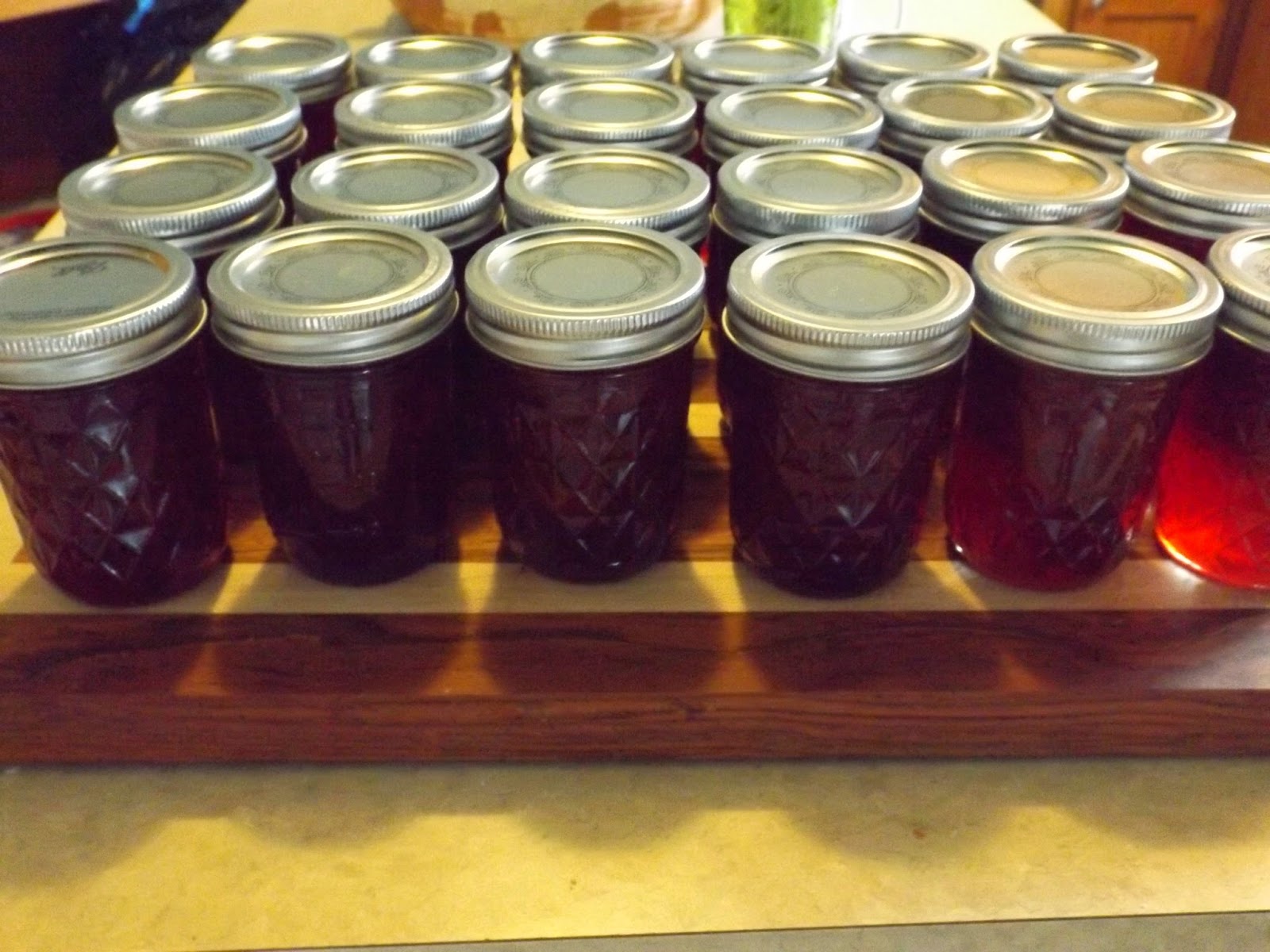
Strawberry Jam
My brother loves to say, "It's the best in the world!"
~created on my farm~

Wheatweaving
Simple ornaments created from braided wheat
~created on my farm~

This won’t be a long blog, but wanted to make this status public.  Help spread the word.

Felted Hearts
Shorn Wool and dyed
~created on my farm~


Going Green in the Bluegrass!   
I will display the Kentucky Proud logo!


Tuesday, September 16, 2014

"Woolly Wordless Wednesday"

We Bid Ye Welcome!!
Dolly Llama and Serendipity in new field


Mate'  likes fooood!
Strauna

J-J-J-Jenna! I am precious and lovable!

I am Yerba and I am mighty!!


Voyager- He's "outstanding in his field"   lol!!
Song checking out the new field.

Silver Waiting for Dinner Bell!


Fancy Face checking out the yard


Imax alerting me that "The Horses are Coming, The Horses are Coming!"


Thursday, September 11, 2014

How to Process Wool

My banner for the
KY Wool Festival
Have you ever faced a task so daunting that you just can’t find the strength to begin? I know it sounds wimpy; but, for me it is my wool processing (this year anyhow)!  So, I figured if I spelled it out step by step and had to take photos along the way to make the tutorial more interesting, I would already have completed some part of it…..and as they say, “parts do add up”.

These three are each very different-
Shetland, Icelandic,Tunis
So, to process wool, you must first begin with WOOL! You get wool from sheep. (For those who may not know, not all sheep have wool, some have hair and they don’t need to be shorn. These animals are usually raised for meat.)  Just as we all have different hair types, sheep have different wool types.  You cannot say that one type of sheep is better than another, because each has wool suited for a specific purpose. 


For instance, some sheep have very coarse wool. Well, rather than making a soft, cozy sweater to be worn close to your skin, that wool would be better suited for a rug, able to withstand heavy traffic. Some wool has more lanolin, thus being more weatherproof (do fishermen’s sweaters come to mind?)  Some wool or fleeces have a loft or spring to them. These are awesome for snuggly blankets made from thickly spun yarn or multi-seasonal quilt battings (remember that wool is flame retardant).  
Her wool is very lofty and
makes excellent quilt batts.


Some have a tight crimp and that makes it very stretchable for ribbing on a sweater or socks! Some even have a very high sheen or gloss to their locks. So you see, you can’t just choose a sheep and expect it to have all the qualities in its wool that you might ever want. That’s why I have a small (very small) flock!  Each sheep has different qualities and each of those qualities I appreciate.  I really “need” (?) more sheep, but I just can’t do that right now.


Imax's Fiber is very different from
 the other llamas on our farm.

I process my llama fiber the exact same way as the detailed steps of wool processing that I will outline below. And I will tell you, that llamas have as many varied types of fiber as the sheep have of wool.

We won’t dwell on the shearing aspect today. We will assume that it is off the sheep and we are ready to go!


I keep each fleece separate.  Because I have different wool types and colors of fleeces, I don’t want them mixing. So, I am very careful to clean up my shearing area in between each shearing…or move locations.
Wool from Stella (unwashed)

Once I have the shorn fleece.  I take it to a comfortable work area.  I’m going to be there awhile. First I do what is called “skirting” the fleece.  That means taking away all parts of the fleece that are not worth trying to salvage. If urine is on the wool and you are planning on dyeing it, color reacts to urine, even though it’s been washed. So usually right around their rear ends, I discard that wool. Also, a band around their entire necks usually has debris, seed heads, etc., in it and it would be too tedious a task to clean to make it worthwhile. Some years I discard a lot, other years, it’s not too bad. I will never blanket the sheep just to keep them clean, but I sometimes threaten them with that.  I just try to keep them from finding ways to play in the hay, and dragging the flakes across each others’ backs.


Wool from Stella (washed)
The lanolin allows dirt to cling to fleece and
looks like a different color from what it is.
Although it was cinnamon colored dirty,
it is white when cleaned. 

Now comes the important part--When I feel that I’ve done a thorough job skirting, I fill my washing machine (yes, MY washing machine) with the hottest water it will do. When it has filled, I STOP the machine. This is absolutely the most important thing to remember! Then I add about 1/2 cup of DAWN Dishwashing liquid to the water and using my arm, swish it around a bit. Then, I add either 1/2 or all of one fleece (this depends on how heavy or how dirty the fleece is). Keep it STOPPED.


Llama fiber, after clean and carded.
 Not wool at all, but I still process the same way.
There is no lanolin in llama fiber.

I GENTLY make sure the fleece is submerged, but I DO NOT  allow the machine to agitate.  If it does, you have just FELTED your fleece and will not be able to use it in a traditional way. It won’t even be traditionally felted!  Anyhow, do not, I repeat do not let it agitate.  Close the lid to keep the water hot and then set your timer for between 15-20 minutes. Let it SOAK only.

When your timer beeps and lets you know the time has passed, advance the dial to DRAIN/SPIN. Yes, your fleece stays in for this ride. It will drain and then spin out to get rid of all water. (Do NOT let it begin to refill while your fleece is in the machine!!)
When water is gone and machine has stopped, remove the fleece and put in a laundry basket. Your washing machine will be AWFUL looking….but don’t panic.  This is good; this means the wool is coming CLEAN!!  When you begin wiping out the machine drum, I imagine you will think of The Cat in the Hat and that horrible mess! It is VERY simple to clean your machine.  Use a wet dish rag (deemed only for this) and wipe sides of drum. Rinse rag and wipe again. Repeat. Repeat, until inside is clean. You could use paper towels and throw away, but that’s such a waste.
Shetland Wool from Jenna


Now, fill the machine with HOT water again.  Add Dawn dishwashing liquid again. STOP the machine again. Put fleece in again.  Let soak for 15-20 minutes again. Drain and Spin again. Remove fleece and clean machine again.

Now, if you are happy with the cleanliness of your fleece, we’ll move on to the rinsing phase.  If you think you’d like it a bit cleaner, do the whole process again.
But, if you are ready to rinse, still fill the machine with hot water.  Never let the temperatures fluctuate drastically between soaking and rinsing. This time do not add the soap.  NEVER let the water fill while the fleece is in machine; that simple agitation of water landing on it could felt the fleece depending what type of fleece (some felt more readily than others).
How you card the wool will enable you to
blend the colors in various ways.


Now after it has spun out, remove fleece and clean machine for the final time.  I usually run the machine through the rinse cycle just to ensure that dirt doesn’t stay and dry in the machine for my clothing. I run some vinegar through it, too.


Inspect your fleece.   If there is any debris that can still come out, pick it out now.  Otherwise, let it dry.  Do not put in direct sunlight. But, it can be on a covered porch, etc.  Toss or flip it from time to time to ensure it is drying. This can take a ½ day or so.  I usually wash for a few days and the fleeces begin to dry while I am washing others.

Clean and waiting to be picked!

Now comes the “picking” phase.  You will be grabbing handfuls of wool and
“picking” it.  Hold a clump in one hand and pull with the other. It begins to separate and lighten the feel of the cleaned fleece.  While you are “picking”, usually more debris (organic matter as it’s lovingly called) falls out. So, do NOT do the picking over your clean wool.  Stand to the side so that it’s not all falling out only to land in the other wool that you haven’t done.  


Llama fiber not washed yet.
So different from wool when it's not washed.
This should be done OUTSIDE to make you a happier housekeeper! 


When the picking is done, the wool is now ready to be carded. Carding is done with instruments that have many teeth/combs, much like a dog’s brush.

You can use hand carders, or a drum carder.  A very sweet friend of mine has loaned me her beautiful drum carder in the past and it has been so much easier on my arms than the pair of hand carders that I have; even though I love the feel of holding the wooden handles in my hands while carding! 
Small batts ready for spinning.

If you use the hand carders, you roll the combed wool off the carder and they stay in little rolags (Scottish Gaelic – roileag meaning small rolls) until you are ready to use them for spinning or felting.  If you’ve used the drum carder, the wool comes off in small batts, and they may be placed aside until you need them.
Both Fiber and Wool animals
must be shorn AFTER they use the
warmth to get through the winter!


Last note:

Worsted Wool – is thin and flat. The hairs are all the same length and parallel to each other; not overlapping.

Woolen Wool – is fluffy and springy.  This is from short and long hairs mixed together, overlapping, and twisted while spinning.


Hope you’ll try it.  If you have tried it and done it differently, please let a note!


Monday, August 18, 2014

2015 Farm Calendars have Arrived!


I am so excited!! My 2015 calendars of the farm have arrived from the printers today.

Calendar Cover


I have worked on this project for over a year.  Every time I thought I’d had the photos for each month just the way I wanted them, a more perfect picture, even more fitting than the last, would present itself.  For instance, I thought I had the most perfect shot for OCTOBER’S main photo.  But, on a heavy foggy morning while I was out photographing the farm, I caught a glimpse of the horses through the gates rungs that just happened to have a spider web laden with dew, hanging there.  The mood was perfect for October.  So, OCTOBER it was!


Calendar Back with all months shown

Another similar instance was for January.  I had a taken a beautiful photo of the pond totally iced over.  It was at dusk and the glow was reflecting back.  I thought it was perfect; however, friends and family felt it was a little “cold” to start the year off, so instead Imax (our yard llama) is the pin-up for January!


Similarly for December, I had chosen a photograph of a scarf that had been knitted from the spun lamb fleece of one of our favorite sheep (Yerba).  Again, friends and family said even though the photo was gorgeous they hoped to end the year with one more glance at life on the farm and home to so many animals.  I looked and looked through literally hundreds of photographs from this year trying to match what I thought suited DECEMBER and what would still please my “critics”!  As luck would have it, we had a fluke storm in late winter and the snow fell at blizzard rate.  I could barely see outside more than 25 feet away.  That must have been all I needed.  I caught a wonderful photo of so many cardinals (male and female) at one of our feeders at a backyard crabapple tree not far from the house.  I opened the dining room window and took the shot from there, so as not to scare them away and to prevent my lens from fogging up.
December's main photo


I designed the calendar for people who are interested in life out-of-doors.  While each month has a large pin-up 8 x 10 size photograph up above, down below in the actual days/date part there are gardening tips, odd facts about moon phases, holidays, random animal trivia, and wonderful small photographs of life on the farm during that particular four weeks.


April's date/day 


April features trivia on the native shrubs and trees that begin to grace the landscape across the bluegrass region of Kentucky and also the mid-region of our Country. The Full Pink Moon is in early April.  The small photos include Victorian hollow peek-a-boo sugar Easter eggs that I make to sell that time of year, daffodils, Scottish Shortbread that HeartFelt Baskets & Gifts also makes, as well as Sweet Pea, Dolly Llama, and some of Dolly's roving.


For example in February, we not only have Ground Hog’s Day, Valentine’s Day, Ash Wednesday, and Presidents’ Day, but we also have the Full Snow Moon,  and reminders to sharpen pruning tools, clean nesting boxes, and make homemade bird treats.  The small photos include some chocolate covered strawberries that I made as well as cardinals and bunnies sharing bird seed under one of our feeders!

A typical month's date/day calendar inside
March includes Pi-Day 3.14 (Pie Day on March 14th) as well as a Daylight Savings reminder. Lots of gardening tips as well as a small photo of one of the Wool Wreaths that I make, adorned with a green burlap bow and felted Shamrock in honor of Saint Patrick's Day, are highlighted during this month.

I am certain you will love the calendar as much as I do.  By the end of the year, you’ll feel as though my hobby farm is your farm, too!  And that’s what I’m hoping for.   Whether or not you live in the country or even take care of many animals on a daily basis, this calendar is for you if you appreciate the simpler yet more colorful things in life. 


The quantity is limited, so I hope you will order a calendar soon and enjoy a HeartFelt year in 2015, day by day!  

Thursday, August 14, 2014

Help! I'm Spinning and Can't Stop!

Spinning Wheel next to Loom
Whether it’s Rumpelstiltskin or Sleeping Beauty, a fairy tale of some sort usually comes to mind if someone mentions a spinning wheel.  Almost 20 years ago, in the Old Spanish Quarters of St Augustine, Florida, I watched in amazement as a woman sat and spun flax on a traditional looking spinning wheel. As minutes passed and the whirl of the wheel relaxed and soothed the mood of everyone in the room, I remember thinking that I wish I could learn to spin. At that time in my life I didn’t even know that people other than time period actors still spun and that spinning wheels are constantly being updated!

Fast forward 10 years, and place me in a small, rural Kentucky town managing an 1865 Opera House.  I was directing children’s theatre productions and the current title had been, “The Emperor’s New Clothes”.   Now, I know this doesn’t usually portray a spinning wheel in the story; however, I wanted to teach audiences each night that textile production at one time had been very time consuming. First, you had to grow the fiber (either plant or animal), then harvest and clean it, then spin the fiber into thread/yarn, then weave into cloth, then measure, cut, and finally sew.  This could take several months-not the 5 minute trip into Wal-mart that happens now-a-days!

A Bobbin of Single-Ply Llama Fiber

It was around this same timeframe that I attended The Kentucky Wool Festival in Falmouth, KY and saw for the first time modern spinners! One whole large exhibition tent was filled with many women (and men) spinning, weaving, knitting, felting, and just about anything I could have imagined using sheep wool or llama/alpaca fiber. It was so fascinating! Through talking with many of the fiber artists that day and then doing some research of my own, I purchased my first spinning wheel just a few weeks later. Incidentally, I featured that spinning wheel during the performances of “The Emperor’s New Clothes” and had my older daughter stationed on a                                                                              small stage in the audience spinning llama fiber into yarn.

Lamb Fleece that was Spun and Knitted into Scarf
I don’t know how many of you have tried spinning before, but the initial coordination takes some time. At least for me it did! However, once I got that figured out, my yarn looked very good (I was told) early on. I guess I was consistent in the amount of fiber/wool that I was drafting (allowing to be pulled onto the wheel) and with the speed I was pumping (foot motion of the pedal that turns the wheel).  Still, it is only with practice, practice, practice that you can become better (as with so many things in life).  Those first few years, I spun some, but it seemed like an awful lot of work to get a skein of yarn that didn’t quite knit the way I needed it to.  Then a good friend of mine gave me a tip, I guess she’d assumed that I knew, but it forever changed the way I did things!  She said, “Choose what you want to make, then spin the yarn to fit that need.”  Such a simple concept, but what a difference it made!  I had been randomly spinning yarn of assorted thicknesses and then trying to figure out what I could make with it. Draping evening shawls do not look good with a thick yarn, etc., so I would have beautiful skeins that I couldn’t think of a project for. Or even worse, not enough yardage to finish a project.  Now, if I am short yardage, I can spin some more from the same fleece and know it will match.

My younger daughter is the knitter in the house.  She makes some beautiful things that she enjoys wearing on campus and loves when someone asks her, “Where did you get that?”  I guess her response, “From the Dolly Llama”, conjures up different visuals to different people (one of our llamas that has gorgeous red/brown fiber is named Dolly)!

For me, spinning will always be a learning process.  Recently a friend had given me some mohair from a goat.  I told her I’d try to find time to mess with it this winter and spin it into some yarn that she could try knitting with.  In the process, I’d be learning how mohair handles on the wheel.

Stella Ready for the Early Fall Shearing


One thing about fiber or wool……it is a renewable resource!  Each year, in both the spring and fall and whether or not I’m ready for it, I get several pounds of new resources to work with…… as soon as the SHEARING is done!!